
Supplier visits are one of the most valuable tools in sourcing, and one of the most underused.
Most buyers schedule a tour, review samples, sit through a presentation, and leave. That’s not a bad start. But the evaluation that actually protects your supply chain happens on the floor, in the details most people walk right past.
Here’s what experienced sourcing teams are looking at when they visit at origin:
1. Storage conditions between processing steps
Product quality isn’t just about how something is processed, it’s about what happens between steps. How are raw materials held before processing begins? Are finished goods stored separately from raw inputs? Is temperature and humidity being actively managed, or just monitored? Inconsistent storage is one of the most common root causes of quality variation that doesn’t show up in a lab report until it’s already a problem.
2. Day-to-day operations, not presentation-day operations
Any supplier can prepare for a scheduled visit. What’s harder to prepare is an entire workforce operating exactly the same way on a normal Tuesday. Pay attention to how staff moves through the facility, how product is handled when it’s not being demonstrated, and whether the workflow looks like a practiced routine or a staged one. Small operational inconsistencies, product left unsealed, processing steps skipped or reordered are worth noting.
3. Whether the answers match what you see
Ask questions off the prepared agenda. Request to see something that wasn’t on the tour itinerary. A supplier with real operational depth can answer those questions easily. One that can’t or redirects is usually telling you something important. The gap between what a supplier says and what you actually observe is where supply chain risk is.
4. Traceability in practice, not just on paper
Most suppliers can produce a traceability document. Fewer can walk you through it live, on the floor, with real product. Ask to trace a specific lot. See how long it takes. See whether the records match what’s in front of you. If traceability only exists on paper, it isn’t traceability. It’s documentation.
5. The relationship beyond the sale
This one is harder to quantify, but it matters. Is this a supplier who communicates proactively when there’s a problem, or one you hear from only when everything is fine? The visit is your best chance to assess that. How they handle your questions, how they respond to pressure, how they talk about their own supply, these tell you more about long-term reliability than any spec sheet.
Being a buyer isn’t just about comparing prices or reviewing offers. It means travelling to origin. Walking the facility floor. Asking difficult questions. And building the kind of relationship that can still be confirmed with a handshake. That’s what makes a supply chain actually reliable, not just on paper.
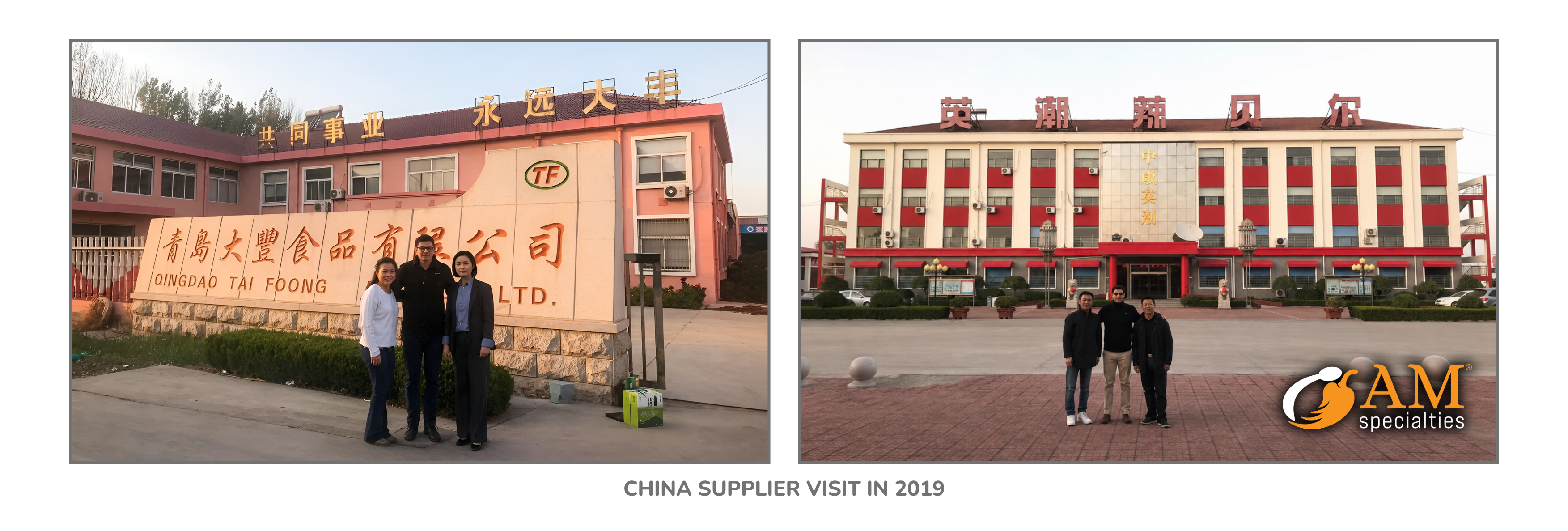
I’m heading to China in August for supplier visits across several ingredient categories. These are the things I’ll be evaluating, same as I do at every origin, in every country.
If your team is planning supplier visits this season, we’d be happy to compare notes.
We’ve turned this into a practical printable checklist you can bring on your next visit, download it here: